What is a VPN? When Should You Use It?
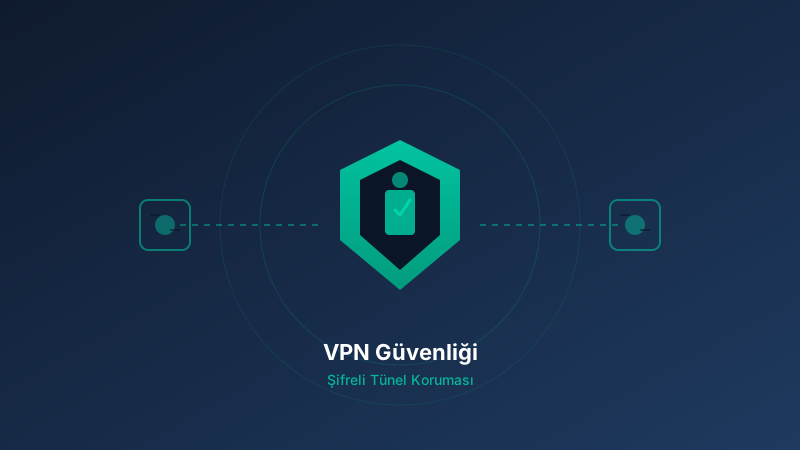
A VPN (Virtual Private Network) is a technology that encrypts your internet traffic and makes it appear as if you are connecting from a different location. As a simple analogy: a VPN opens an invisible tunnel behind you when you go online. The data passing through this tunnel cannot be read by outside eyes.
When should you use a VPN? The most common scenario is when you connect to public Wi-Fi networks. In café, airport, or hotel networks, your traffic can be monitored. A VPN protects against 'man-in-the-middle' attacks in these networks. It also prevents your Internet Service Provider (ISP) from logging your browsing habits.
Correct VPN usage scenarios: secure access to company network on business trips, access to censored content (in the context of press freedom), and preventing ISP-based surveillance. For example, using a VPN to access internal company resources during a business trip from BASEL is a standard security practice.
Incorrect VPN usage scenarios: a VPN does not guarantee anonymity. Your VPN provider can see your traffic, and some free VPNs sell your data. Also, using a VPN can reduce your speed; therefore, you may experience performance issues with bandwidth-intensive operations (large file downloads).
Proton VPN is a privacy-focused VPN provider based in Switzerland. Switzerland's strong privacy laws and Proton's transparent no-logs policy make it a trustworthy option. QMOBILE, with its BASEL-based approach, recommends tools to users that comply with Swiss privacy standards.
VPN limitations: a VPN does not block browser cookies, browser fingerprinting, or in-app tracking. For complete privacy, use a VPN in combination with tracker-blocking browser extensions and privacy-focused browsers. Also, some services may block VPN traffic even in countries where VPNs are legal.
Practical steps: choose a trustworthy VPN provider (such as Proton VPN, Mullvad), enable the app's 'kill switch' feature — this prevents your data from leaking unencrypted if the VPN connection drops — and set the connection protocol to WireGuard. WireGuard is a modern, fast, and secure protocol.